
RBI's interest rate decision, macroeconomic data, global trends and trading activity of foreign investors are the crucial factors to drive equity markets in a holiday-shortened week ahead, analysts said. Markets would remain closed on Monday for Gandhi Jayanti. "While global cues will continue to dictate trends in local markets, focus will shift to RBI's monetary policy announcement on Friday. "Although the market is expecting a status quo on interest rates, global concerns like rising US dollar index and bond yields coupled with surging crude oil prices continue to weigh on investors' minds.

Maruti's results and the investor response indicate that quite a few stocks in the auto sector could be on the verge of a big bounce, says Devangshu Datta.

Average overall sales which used to be around 8,000 units a year ago has dropped to 7,000-7,500 units in a month. A lot of government projects have been announced but these are yet to translate to boost CV sales.

Bajaj Auto is gearing up to launch clean-energy vehicles including another motorcycle powered by compressed natural gas (CNG), showcase ethanol-powered motorcycles and three-wheelers next month, as well as launch a new Chetak platform early next year, as it closes in on hitting 100,000 monthly sales from clean-energy vehicles this festival season. In an interview with CNBC-TV18, Bajaj Auto managing director Rajiv Bajaj said these initiatives were part of the firm's broader goal to achieve monthly sales of 100,000 clean-energy vehicles this festival season.

Indian companies also hold a considerable share of the car, bus, and three-wheeler markets in the country.

Tata Motors plans to set up separate sales network for its electric passenger vehicles in current fiscal year as it looks to give differentiated experience to the buyers opting for the environment-friendly models, according to a top company official. The Mumbai-based auto major, which on Thursday introduced all-new versions of its Nexon EV and Nexon (internal combustion engine), said it will start experimenting with new outlets in some of the cities where EV volumes have gone up. "We'll have to separate them (sales outlets for EVs and ICE) given that we have different requirements of customers and also a growing portfolio (of EVs)" Tata Motors Passenger Vehicles managing director Shailesh Chandra told PTI in an interaction.

Retail sales of overall vehicles in India grew by 15.28 per cent to 2,11,20,441 units in 2022 led by record sales of passenger vehicles and tractors, Federation of Automobile Dealers Associations (FADA) said on Thursday. In 2021, total retail sales of vehicles in India were at 1,83,21,760 units, FADA said in a statement. Two-wheelers retail sales stood at 1,53,88,062 units last year, a growth of 13.37 per cent from 2021 when sales stood at 1,35,73,682 units.

Bajaj Auto Ltd has posted a 19.2 per cent increase in the motorcycle sales at 82,239 units in June 2003, compared to 68,965 units sold in the same period last year.

Automotive (auto) and consumer appliance companies are hoping for a bounty from the harvest season after two consecutive dry spells in 2020 and 2021. The season, which also marks the beginning of the regional New Year, kicked in across the country from April 1 - Gudi Padwa in Maharashtra; Ugadi in Karnataka, Telangana, and Andhra Pradesh; Bihu in the Northeast; and Chaitra Navratri in the North. Manufacturers and retailers of cars, two-wheelers, and consumer appliances said they have seen demand pick up year-on-year (YoY) at a brisk pace across categories.
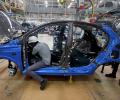
While sales of compact cars, including models such as Swift, Celerio, Ignis, Baleno and Dzire declined, sales of utility vehicles, including Vitara Brezza, S-Cross and Ertiga, increased 26.3 per cent to 19,177 units as compared to 15,178 in the year-ago month.

Petrol and diesel sales in India jumped in September as economic activity picked up with the nearing festival season and the ending of the monsoon raised the demand, preliminary industry data showed. Petrol sales soared 13.2 per cent to 2.65 million tonnes in September when compared to 2.34 million tonnes of consumption in the same month last year. Sales were 20.7 per cent higher than Covid-marred September 2020 and 23.3 per cent more than pre-pandemic September 2019.

Expanding investigation into allegedly wrongful claims of input tax credit by insurance companies, the tax authorities are probing a section of automobile dealers who have supposedly generated fake invoices without providing any service, which is a punishable offence under goods and services tax (GST) law. The authorities are learnt to have questioned the car dealers to explain the services they provided general insurance companies. The investigators suspect car dealers pitched for insurance schemes that give them commissions in excess of those insurance regulations permit.
Beginning with a bang amid all the glitz and glamour of the biennial Auto Expo, the year will be ending with a whimper for the automobile industry as sales dwindle, and the worst-ever industrial violence at Maruti Suzuki's Manesar plant leaves a big scar.

The two-wheeler segment is, however, still far from its H1FY19 peak of 9.7 million units

Passenger vehicle wholesales in India declined nearly 4 per cent to 279,501 units last month, auto industry body SIAM said on Wednesday. Passenger vehicle (PV) dispatches from factories to dealerships in March 2021 stood at 290,939 units. As per the latest data by the Society of Indian Automobile Manufacturers (SIAM), two-wheeler sales also fell 21 per cent to 11,84,210 units as compared with 14,96,806 vehicles in March 2021.

Hero MotoCorp, Honda Motorcycles, Scooters India, TVS, Honda India, Toyota Kirloskar Motor, Ford, Nissan, Ashok Leyland are all giving the Auto Expo a miss this time.
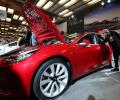
While Elon Musk's political influence continues to grow, his business empire is witnessing headwinds.

Macroeconomic data, the pace of vaccination and global trends would be the major drivers for the domestic equity markets this week, analysts said. Besides, the progress of monsoon will also be monitored. "This week marks the beginning of the new month also, so participants will be eyeing the high-frequency indicators like auto sales and manufacturing PMI during the week. "Besides, the progress of monsoon will also remain on their radar.

Trading in the domestic stock market would be influenced by trends in the global equities, macroeconomic data and foreign fund movement in a holiday-shortened week, analysts said. Markets may face volatile trends on Monday after Federal Reserve Chair Jerome Powell's speech at the Fed's annual economic symposium in Jackson Hole on Friday.
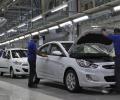
Domestic passenger vehicle (PV) sales saw a significant growth in October due to increased availability of semiconductor chips and rising consumer confidence. The sales figures during the month - which coincided with the first post-Covid festival season - released by the top ten carmakers saw a jump of 30.7 per cent to 322,885 units in October. Auto companies count wholesales - units dispatched to dealers - as sales.

French auto major Renault on Monday said it will buy out its Japanese partner Nissan's stake in their Indian joint venture -- Renault Nissan Automotive India Private Ltd. Renault Group would own 100 per cent of Renault Nissan Automotive India Private Ltd (RNAIPL), by acquiring the 51 per cent shareholding currently held by Nissan, the company said in a statement.

The S&P BSE Auto Index has been one of the biggest outperformers among sectoral indices over the past year with returns of 26 per cent. By comparison, the benchmarks - the National Stock Exchange Nifty50 and the S&P BSE Sensex - managed about 6-8 per cent during this period. Improving demand, falling raw material costs, and rising product realisations, led by the premiumisation of portfolios, have led to a revision of growth estimates and upgrades by domestic brokerages.

A lower base could be part of the explanation but not all.

Automobile, apparel and electronics are among sectors that see a sales boost during the festival season, a time when investors expect gains in related stocks. This year could be different: Analysts have factored in all positives and do not expect such stocks to deliver lucrative returns. "Indian households spend across sectors like automobiles, consumer durables, and consumer staples during the festival season.

Equity benchmark indices Sensex and Nifty on Friday reversed their six-session losing streak and rebounded more than 1 per cent on value buying in auto, IT, financial and energy stocks. Better than expected quarterly financial results of corporates also boosted investor sentiments even as uncertainties persisted over the escalating tensions in the Middle East, according to analysts. In a largely range-bound trade, the 30-share BSE Sensex rose 634.65 points or 1.01 per cent to settle at 63,782.80 points.

'Price competition is fierce, with many companies selling at zero margin.' 'This pricing pressure is challenging smaller companies and will likely drive some out of the market over time.'
The recent stimulus measures announced by China have seen most analysts sit up and take notice.

Honda Motorcycle and Scooter India (HMSI) on Wednesday forayed into the fast-growing domestic electric mobility market with the introduction of e-scooters, ACTIVA e: and QC1, with swappable and fixed batteries. With this, the Japanese two-wheeler maker will now be competing with other legacy players such as Bajaj Auto, Hero MotoCorp, TVS Group as well as pure EV players like Ather and Ola, who already have a good presence in the segment, which is growing at 34 per cent year-on-year.

From setting up cutting-edge facilities to cater to the domestic market and building capabilities of global standards, the action is building up.

Tax evaders, BEWARE! The Income Tax department is using AI data analytics to bust fake deductions, flag HRA fraud, and trace digital footprints.
Leading carmakers Maruti Suzuki, Hyundai and Tata Motors reported robust dispatches to dealers in May on the back of strong demand for passenger vehicles across regions, even as the global semiconductor shortage continued to impact production. Mahindra & Mahindra, Kia India, Toyota Kirloskar Motor, Honda Cars and Skoda also witnessed strong demand for their models last month. The month of May also witnessed Tata Motors race ahead of Hyundai in terms of domestic wholesales.

The country saw a massive year-on-year surge in the demand for electric vehicles, with retail sales of electric two-wheelers rising by 58 per cent, passenger vehicles by 130 per cent, three-wheelers by 82 per cent, and commercial vehicles by 171 per cent in March 2023, according to the data shared by the Federation of Automobile Dealers Associations (Fada). According to a report by JMK Research, the EV segment as a whole grew by 157 per cent during FY23, to 1,180,597 units, from 458,746 units a year ago. Overall, EV sales in March 2023 rose by 82 per cent from the March 2022 figure, the JMK report added.

Maruti Suzuki India on Wednesday reported a 42 per cent rise in consolidated net profit to Rs 2,671 crore for the fourth quarter ended March 2023, driven by higher sales, improved realisation and favourable forex movement. The country's largest carmaker logged a net profit of Rs 1,876 crore in the January-March of 2021-22. Net sales during the fourth quarter rose to Rs 32,060 crore compared to Rs 26,749 crore in the year-ago period, Maruti Suzuki India (MSI) said in a regulatory filing.

From Tetley Tea to Jaguar Land Rover and Air India, Ratan Tata has ticked off almost every item on his bucket list. However, one that remains unfinished is the electric version of his small car, the Tata Nano. A concept entrusted to Coimbatore-based Jayem Automotives (Jayem Auto) is still on the shelves, despite nearly 400 cars being launched, primarily due to Covid-19 and new crash norms.

Open order books in February breach 700,000; wait period for some models exceed a year.

'The August phenomenon of decline in sales occurs every year.' 'What they have done cleverly is, using the economic slowdown as an excuse, they want a package from the government to compensate the expenditure they will incur while converting BS4 to BS6.' 'That's why they are making a hue and cry.'

The Union Cabinet on Wednesday approved a Rs 26,058 crore production linked incentive (PLI) scheme for auto, auto-components and drone industry to enhance India's manufacturing capabilities, Union Minister Anurag Thakur said on Wednesday. The PLI scheme will incentivize the emergence of advanced automotive technologies' global supply chain in India.

Maruti Suzuki India on Tuesday said it has commenced export of its sports utility vehicle Fronx to Japan. The first consignment of over 1,600 vehicles left for Japan from Gujarat's Pipavav port, the country's largest carmaker said in a statement. Fronx will be the first SUV from Maruti Suzuki stable to be launched in Japan, it added.

India's electric two-wheeler (E2W) sector is expected to cross the one million mark in 2024 fuelled by rising demand, increased production, and affordability, industry experts said, even as several original equipment makers are expanding their penetration to rural areas. Improved battery technology and innovative features are also likely to fuel growth, they said. "E2W sales will breach the 1-million mark in 2024 as the demand for electric two-wheelers is expected to continue growing due to factors such as environmental awareness, government incentives, and improvements in technology," Hyder Khan, chief executive officer (CEO), Godawari Electric Motors, said.

Once the 21-day lockdown is lifted, which may happen in phases, those who have been contemplating purchasing a car may actually do it, said analysts. Thanks to social distancing norms and rising hygiene awareness, daily commuters may ditch public transport and shared mobility solutions like Ola and Uber. Many are likely to prefer the confines of a car over roughing it up in crowded public transport services such as a metro, local sub-urban trains and buses, they said.
